
We recently had a top candidate for a sales executive search.
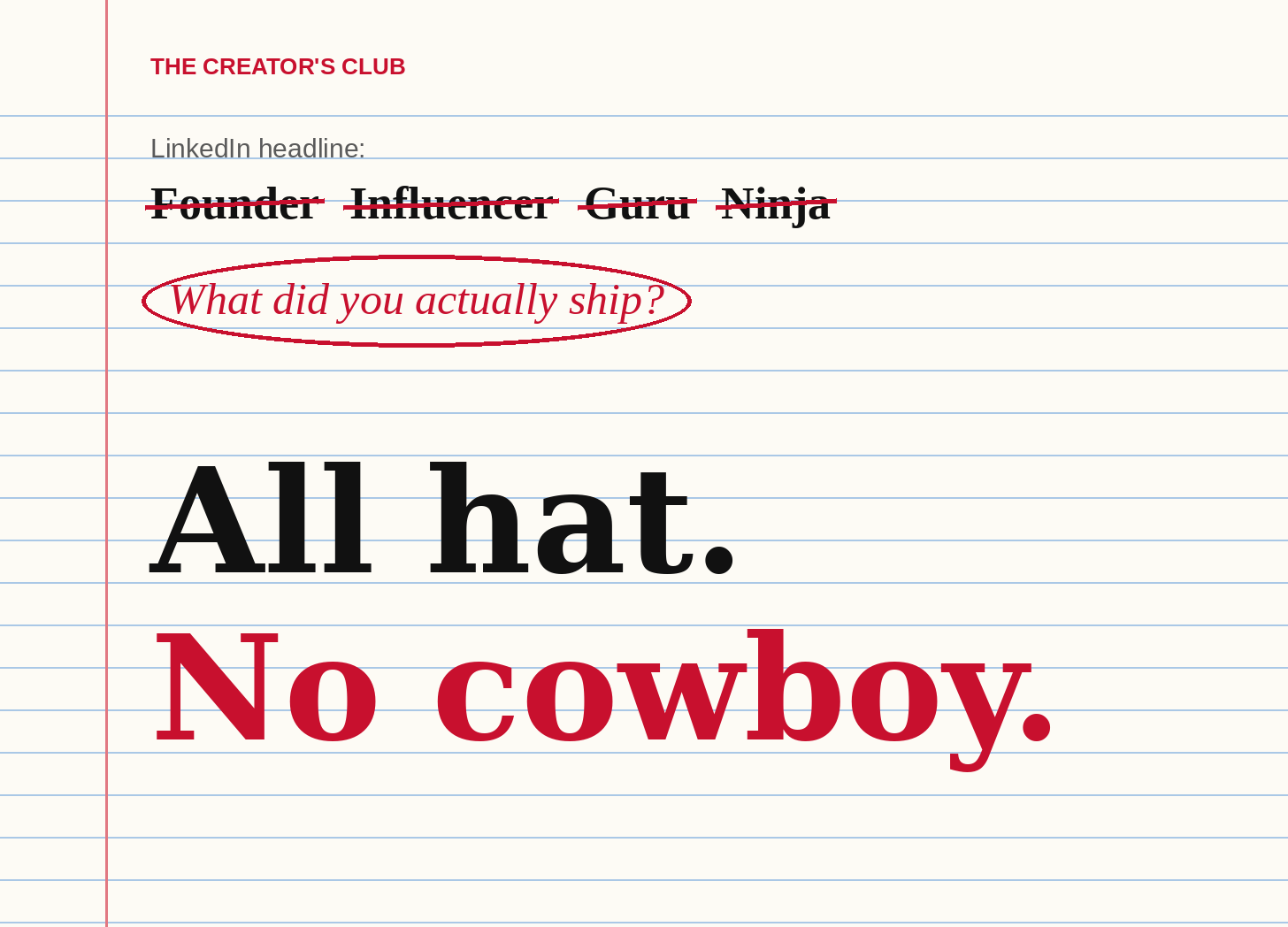
On paper, he had everything. Marquee companies. All the right titles. His LinkedIn headline even said Founder and Influencer.
He posted about his work all the time.
Then he had to interview.
With our team, he always wanted to talk. But every time we asked where he actually moved the needle, we got a story. Never a number.
For the client’s panel, he brought a presentation built with AI. That’s fine. But when the panel asked him to walk through the numbers on his own slides, he couldn’t.
Then he sent a follow-up to the hiring team with zero context. No note on what it was or why it mattered.
Both interviews fell flat.
Real ninjas don’t call themselves ninjas
I spend a lot of time on LinkedIn. For most of our searches, that’s where the candidates are.
And I’m all for people posting. Share the wins. Share the losses. Tell people what you’re building.
But I’ve never met a real expert who goes around announcing it. The real gurus and ninjas are too busy working on their game.
When I picture a real ninja, it’s some guy, maybe a low key tough woman, you don’t think much of. Then they open a can of whoop ass on you.
There’s an old saying for the opposite: All hat. No cowboy.
Posting isn’t the job
I don’t judge anyone by how often they post. Posting a lot doesn’t make you bad at your job.
But more often than I’d like, the loudest profile in the search turns out to be all talk.
I’ve seen every type succeed. Some people work quietly, do a damn good job, and have zero interest in LinkedIn. Some post a little. Some post three times a day and have a following.
Any of them can be a top performer. It comes down to how good you actually are at your job.
Likes aren’t a track record.
The better questions:
Did I make more progress today than yesterday?
Am I moving forward?
And who really needs to know about it?
Only you know
If your effort has been questionable lately, you already know it.
You know the days you worked hard. You know the days you didn’t. Nobody has to tell you.
So make the adjustment. Over time, the results will show.
Share them with the world if you want. Or tell your friends, your family, or your dog. Feel good for a few minutes.
Then keep moving.
If you’re the candidate
You don’t have to post every day. You have a job to do.
But if you’re on LinkedIn, play the game a little. Put up a real photo. List your actual titles. When a recruiter finds you, give them something to work with.
And if you do go all in on posting, be damn good at your job. Because the interview is where the hat comes off.
Bring your numbers. Know where you moved the needle, by how much, and how long it took. If AI helped build your deck, great. Know every number on it cold.
And when you send a follow-up, tell them what it is and why it matters. A file with no context makes them do your work for you.
Ship products. Close deals. Make a difference in people’s lives. That will matter more than your selfie in front of some cool building.
If you’re the hiring manager
A big following is not a track record. Don’t let it do the interviewing for you.
Ask what they shipped, not what they posted. “Walk me through the last big deal you closed, start to finish.” The people who did the work give you numbers. The people who posted about it give you a story.
Ask for a number. If you get a story, you’ve found the hat.
And don’t skip the candidate with a stale profile and no headshot. Some of the best operators out there barely log in.
Hiring for a seat where you need the cowboy, not the hat? Or are you the quiet one doing great work that nobody’s noticed yet? Hit reply. That’s exactly who we go looking for.