
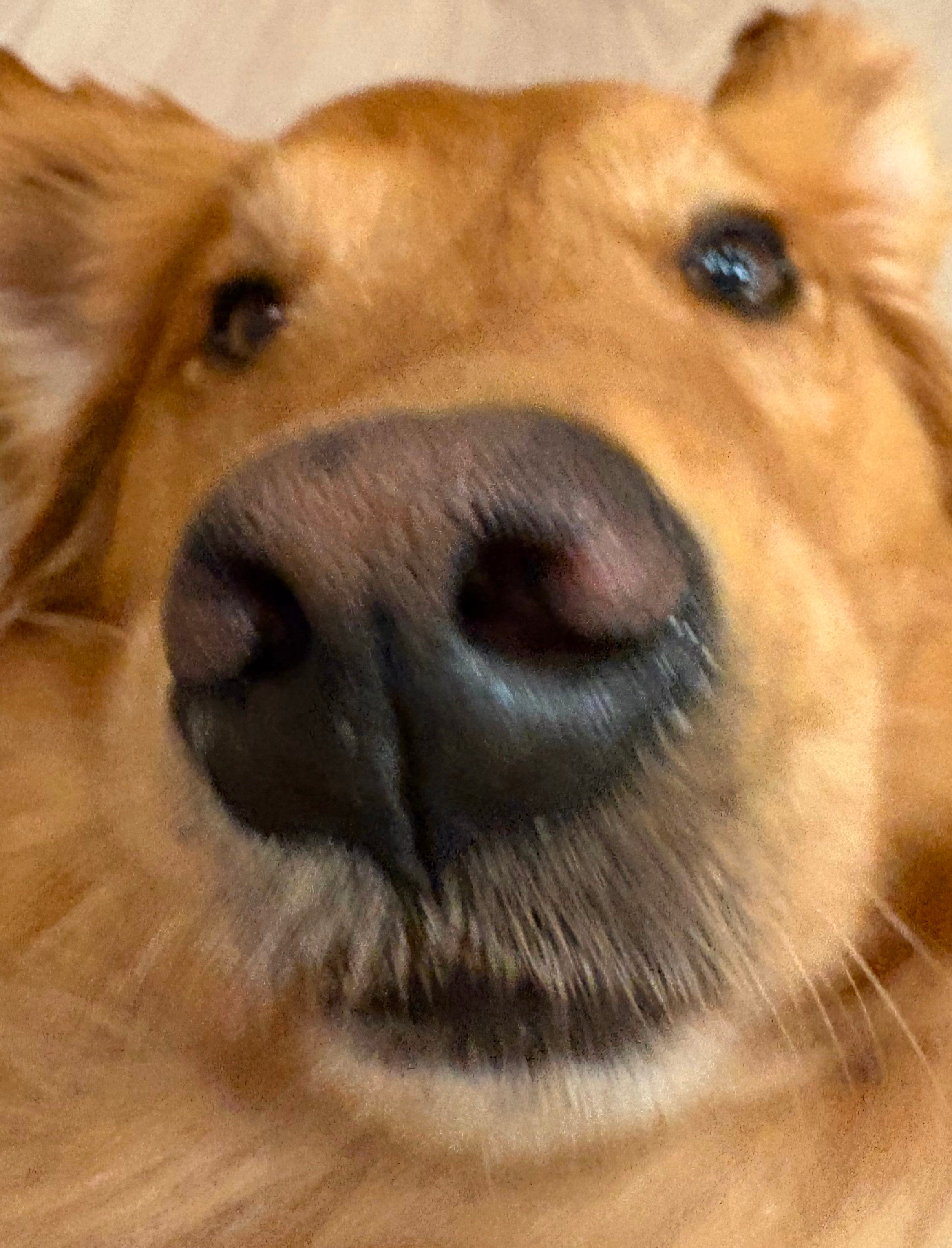
Last Friday, my dog Coco got a tapeworm. By Sunday she’d vomited for two straight days and was declining fast enough that we hospitalized her.
I’m not great with vet tech work — that’s my wife’s department — but I am good at one thing: paying vet bills.
And sitting in that vet’s office, I couldn’t stop thinking about the question nobody likes to ask out loud.
What happens to the family who doesn’t have the money to pay the vet bills?
Does the vet treat the dog anyway and eat the cost? Find her a new family who can pay? Or does the bill decide whether Coco lives? I don’t know the answer, and I hope I never have to find out. But I know this: if you can’t cover a real vet bill, that’s worth sitting with before you bring home the dog. Love isn’t the expensive part. Emergencies are.
Coco’s home now. She’s recovering. We got lucky, and I know it.
Here’s where it got me, though.
Ramp Talent runs executive and technical searches — the kind where a bad placement costs a client six figures and a year of momentum. At that level, I’m not just reading a resume. I’m trying to figure out who someone actually is underneath the version of themselves they’re presenting on the call. And almost everyone I talk to is dealing with something I will never see.
Maybe they spilled coffee on their pants five minutes before the call and are sitting there with a straight face. Maybe their dog is at the vet right now. Maybe their kid was up sick all night. Candidates have to perform “fine” because the job is on the line — so they do.
Here’s how I actually account for that when I’m running a search:
I weight the second conversation more than the first. The first call is performance. Everyone’s rehearsed, caffeinated, and on their best behavior. The second call — especially if I catch them on a rough day, distracted, or running five minutes behind — tells me more about how they’ll actually show up under pressure on the job.
I ask what’s hard right now, not just what they’re proud of. “What’s the hardest part of your current role” gets a more honest answer than “what are your biggest wins.” The wins are rehearsed. The hard part usually isn’t, and it’s where I learn how self-aware someone is.
I give weird moments room instead of penalizing them. If a candidate’s energy is off, I don’t write them off in the first ten minutes. I ask a direct, human question — “how’s your week going?” — and actually listen to the answer before I decide what their flat tone means. Half the time it has nothing to do with the job.
I trust references over polish. Polish is buyable. A former manager telling me how someone handled a bad quarter is not. At the exec level especially, I’d rather hear one honest story from a reference than watch another flawless interview.
None of this is about lowering the bar. It’s about making sure the bar I’m measuring against is the real person, not the version of them built for a 30-minute call.
The best way to assess a candidate beyond their interview performance: ask what’s hard right now, not what they’re proud of.
If you’re a candidate, here’s the coaching version of all this: you don’t owe anyone your tapeworm story, but you do owe yourself a little honesty about your own state. If you’re having a brutal week, don’t pretend you’re not — name it briefly and move on. “Quick heads up, it’s been a chaotic week, so bear with me if I’m a little scattered” takes five seconds and buys you enormous grace. The interviewers worth working with will respect it. The ones who don’t were never going to give you grace anyway. And when you get the “what’s hard right now” question, don’t dodge it with a humble-brag. A real answer, with a little vulnerability in it, is what actually makes you memorable after the tenth interview of the week.
Don’t let your dog get a tapeworm. And the next time someone on a call seems a little off, remember — you have no idea what they’re sitting through to be there. The good interviewers ask. The good candidates can say it out loud.
Q: How do you assess a candidate beyond their interview performance? A: Weight the second conversation more than the first, ask what’s hard right now instead of what they’re proud of, give off energy room instead of penalizing it immediately, and trust references over interview polish.
Q: What’s a better interview question than “tell me about your biggest win”? A: “What’s the hardest part of your current role right now.” Wins are rehearsed. The hard part usually isn’t — and it tells you how self-aware someone really is.
Q: As a candidate, should I tell an interviewer I’m having a bad day? A: Briefly, yes. A five-second heads-up like “it’s been a chaotic week, bear with me” buys you grace from the interviewers worth working with — and costs you nothing with the ones who weren’t going to give you grace anyway.